
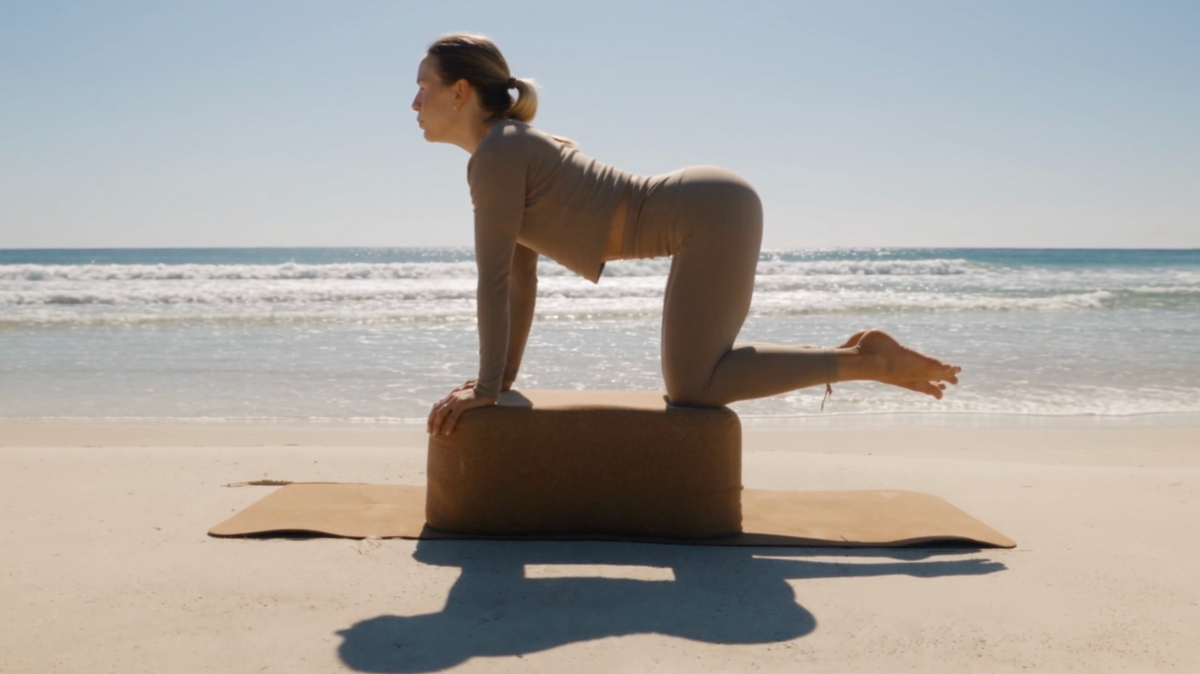
The six commonly taught principles of Pilates are breath, concentration, control, centring, precision and flow. They were distilled by Joseph Pilates' students and later teachers from his method, which he called Contrology. Together they describe how Pilates should be done: mindful, controlled movement organised from a strong centre, rather than repetitions performed for their own sake.
Written by the Elemental Movement Lab and reviewed by Samantha Giam, certified classical Pilates instructor. Updated 30 September 2026.
The six principles at a glance
| Principle | What it means in practice |
|---|---|
| Breath | Full, rhythmic breathing coordinated with movement |
| Concentration | Attention on every part of the movement, not just the main effort |
| Control | No careless or momentum-driven movement |
| Centring | Movement organised from the trunk, often called the powerhouse |
| Precision | Deliberate placement and quality over quantity |
| Flow | Smooth transitions linking exercises into a continuous practice |
1. Breath
Joseph Pilates emphasised complete exhalation and inhalation. In practice, breath is coordinated with effort and used to support trunk control. Many schools teach lateral breathing, directing the breath into the back and sides of the ribs while the abdominals stay engaged.
2. Concentration
Every exercise asks you to attend to the whole body at once: the moving limb, the stable trunk, the breath and, on apparatus, the carriage or springs.
3. Control
Contrology was built on the idea that the mind controls the muscles. Movements are performed with resistance in both directions, including the return.
4. Centring
The powerhouse, broadly the abdominals, back, hips and pelvic floor, is the reference point from which limbs move. A stable centre lets the arms and legs work efficiently.
5. Precision
Each exercise has a specific shape, range and placement. A few precise repetitions are more valuable than many careless ones.
6. Flow
In a mature practice, exercises and transitions link together smoothly. On the reformer, efficient spring changes and transitions are part of the work.
Are there other sets of Pilates principles?
Yes. Contemporary schools sometimes teach their own frameworks focused on alignment details such as pelvic placement, rib cage placement, scapular movement and head position. These complement rather than replace the six classical principles. Read Classical vs Contemporary Pilates.
How the principles shape equipment design
The Elemental Movement Lab applies these principles when designing equipment. Precision and control depend on a carriage that moves predictably; centring depends on stable, well-proportioned contact points; flow depends on quick, intuitive setup. That thinking shaped TerraFold™ and the tactile grooves of Pebble™.
FAQs
Who created the Pilates principles?
Joseph Pilates described the ideas behind his method; the six principles as usually listed were articulated by later teachers and writers summarising his work.
What is the most important Pilates principle?
Many teachers point to breath or control, but the principles work as a system.
How should you breathe in Pilates?
Fully and rhythmically, coordinated with the movement. Your instructor will cue when to inhale and exhale for each exercise.
Read more: Joseph Pilates and the History of Pilates.


