
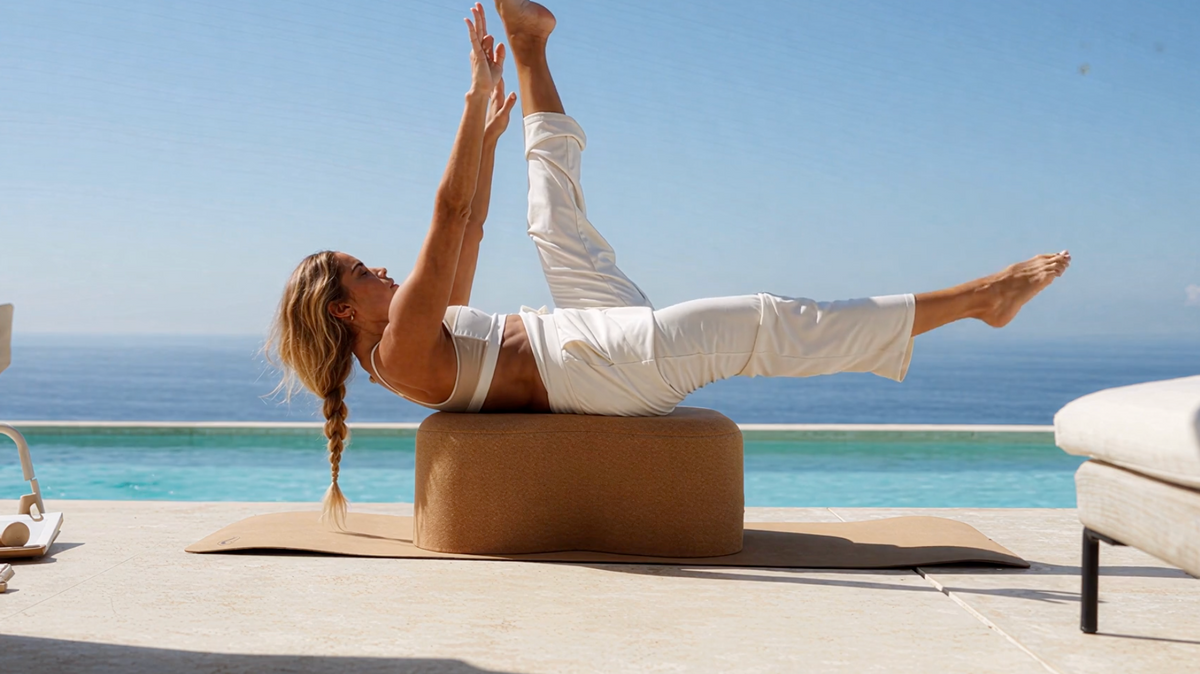
For desk workers, good ergonomics and regular movement work together. A well-set-up workstation reduces strain while you sit; Pilates builds the upper-back strength, trunk control and spinal mobility that long hours of sitting tend to erode. Neither replaces the other, and the simplest rule of all is to change position often.
Written by the Elemental Movement Lab and reviewed by Samantha Giam, certified classical Pilates instructor. Updated 30 September 2026.
What does sitting all day do to the body?
Long static postures tend to round the upper back, bring the head forward, shorten the hip flexors and reduce activity in the glutes and trunk. Many people report stiffness and discomfort in the neck, shoulders and lower back. The problem is less any single “bad” posture than staying in one position for too long.
Desk ergonomics checklist
- Screen: top of the screen at or slightly below eye level, about an arm's length away.
- Chair: feet flat, knees near hip height, lower back supported.
- Keyboard and mouse: close to the body, elbows relaxed near 90 degrees.
- Laptop: use a stand plus separate keyboard and mouse for long sessions.
- Movement: stand, walk or change position at least every 30 to 60 minutes.
How does Pilates help desk workers?
- Upper-back extension: prone and kneeling work strengthens the muscles that counter rounding.
- Trunk control: supports the spine in sitting and standing.
- Spinal mobility: controlled flexion, extension and rotation restore movement lost to sitting.
- Hip mobility: opens hip flexors shortened by chairs.
- Body awareness: you start noticing when you slump, which makes it easier to adjust.
Five movement breaks you can do at work
- Seated spine twist: sit tall, rotate gently to each side for five breaths.
- Chest opener: clasp hands behind you, lift the chest, breathe.
- Chin tucks: glide the head back over the shoulders, ten slow repetitions.
- Standing hip flexor stretch: step one foot back, tuck the pelvis, hold each side.
- Roll down: standing, roll down through the spine and back up slowly.
Stop if anything causes pain, and see a health professional for persistent back or neck pain.
Make movement part of the room
The ergonomics principle that matters most is variety of position. Hybrid workers can make that easier by putting movement equipment where they work. A foldable reformer like TerraFold™ can share a home office or living room and be open for a lunchtime session. For offices, see Pilates in the Workplace.
FAQs
Is Pilates good for posture?
It strengthens the trunk and upper back and builds alignment awareness, which many people find helps their posture.
Is Pilates good for back pain?
Pilates is commonly used within back-care programs, but back pain has many causes. See a health professional for diagnosis and work with a qualified instructor.
How often should desk workers move?
Change position at least every 30 to 60 minutes, and add two or three longer exercise sessions a week.


