
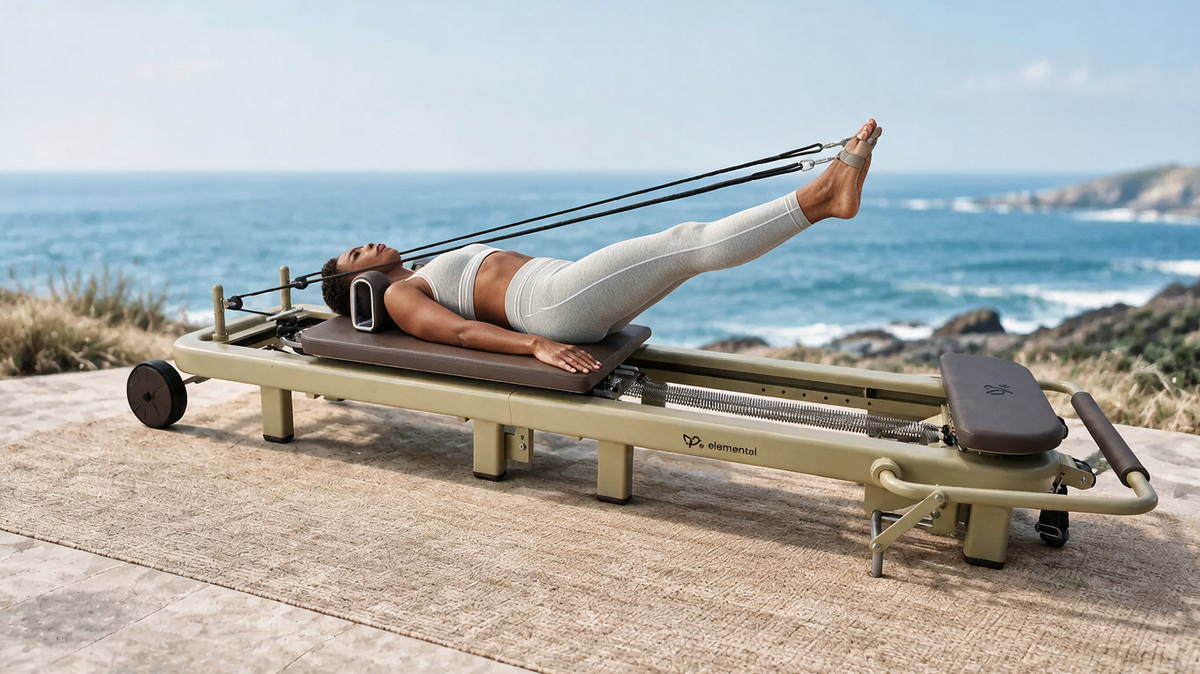
Pilates trains strength, mobility, balance, coordination and body awareness within the same low-impact practice. What changes over time depends on the exercises, how they are progressed, how often you practise and what other movement is part of your life. That combination of control and range is why Pilates suits beginners, athletes and older adults alike.
Written by the Elemental Movement Lab and reviewed by Samantha Giam, certified classical Pilates instructor. Updated 30 September 2026.
The benefits of Pilates at a glance
| Benefit | How Pilates trains it |
|---|---|
| Strength | Body weight, leverage and, on the reformer, spring resistance |
| Core control | Stabilising the trunk while the limbs move |
| Mobility | Moving joints through controlled ranges |
| Balance and coordination | Organising breath, trunk and limbs together |
| Body awareness | Precision and attention to alignment |
| Low impact | Much of the work is lying, seated or kneeling |
Can Pilates build strength?
Yes. Exercises challenge muscles through body weight, leverage and, on the reformer, springs. The effect depends on exercise selection and progression. For the reformer specifically, read Reformer Pilates Benefits.
Can Pilates improve mobility?
Many exercises move joints through controlled ranges, combining mobility with active control. Pain or restricted movement may need professional assessment.
What about balance and coordination?
Pilates asks the body to organise trunk position, limb movement, breathing and sometimes a moving carriage at once, so coordination itself becomes part of the training.
What about posture?
Pilates trains awareness and control of body position, but posture is not a single ideal shape. A useful practice helps you move comfortably through many positions. For desk-based workers, read Pilates for Desk Workers.
Is Pilates good for older adults?
Many older adults use Pilates for low-impact strength, balance and mobility. Start with a qualified instructor, and check with your doctor if you have a health condition, osteoporosis or a recent injury.
Is Pilates good for athletes?
Athletes use it as cross-training for trunk control, hip strength and balance. Read Pilates for Runners and Surfers.
Why consistency matters
Pilates skills become familiar with repeated practice. Consistency gives time to learn patterns and progress resistance or complexity. See How Often Should You Do Reformer Pilates?
Is Pilates enough on its own?
It depends on your goals. A balanced routine may combine Pilates with walking, cycling, swimming, strength training or yoga; read Pilates vs Yoga.
Benefits FAQs
How long before Pilates changes your body?
There is no universal timeline. Many people notice better control within weeks; strength and mobility build over months. Avoid programs promising a visible result after a fixed number of sessions.
Is reformer Pilates better than mat Pilates?
They create different conditions rather than a hierarchy. See Reformer vs Mat Pilates.
Is Pilates good for back pain?
Pilates is often part of back-care exercise programs, but back pain has many causes. See a health professional for diagnosis.


