
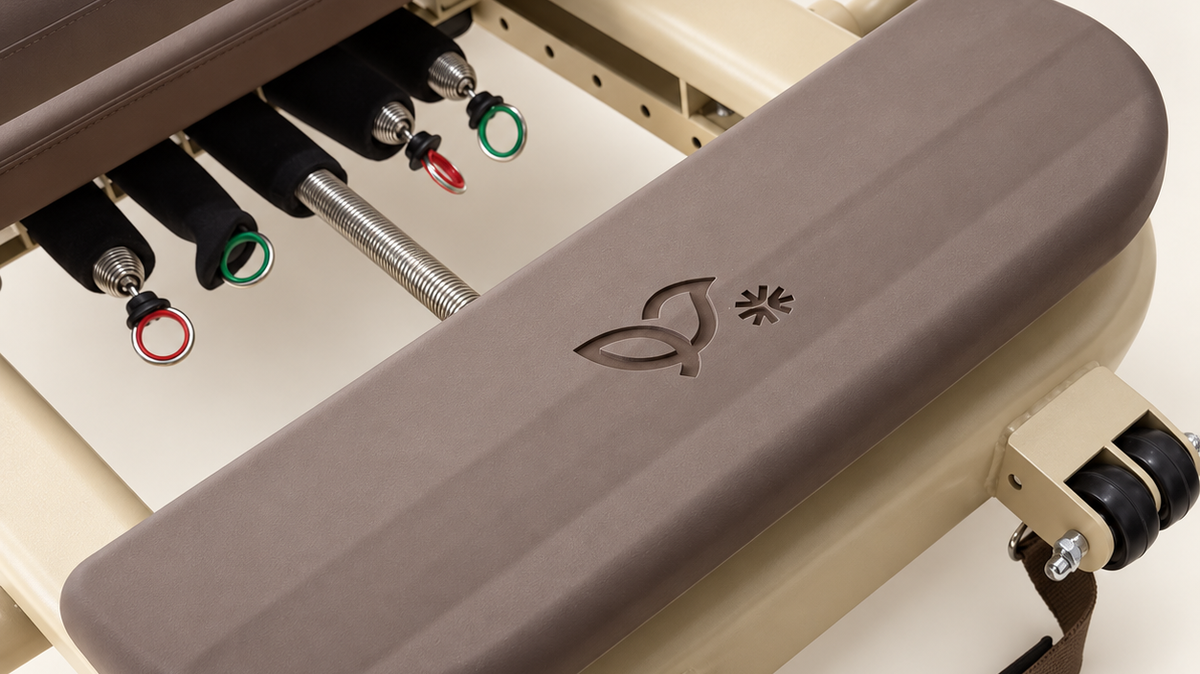
Pilates reformer springs connect the carriage to the frame and provide resistance that increases as the carriage moves further out. More springs or heavier springs add load, but heavier is not always harder: lighter springs often demand more control because the carriage is less stable. Springs are wear parts, so inspect them regularly and replace them on the manufacturer's schedule.
Written by the Elemental Movement Lab and reviewed by Samantha Giam, certified classical Pilates instructor. Updated 30 September 2026.
How do reformer springs work?
Each spring hooks between the carriage and a spring bar on the frame. As the carriage travels away from the stopper, the spring stretches and resistance rises. That is why the same setting feels light near home and heavier at full extension, and why springs both resist and assist: they pull the carriage home, which can support a movement or challenge you to control it.
Why did Joseph Pilates use springs instead of weights?
Springs give smooth, continuous resistance in any direction, including pulling and pushing, without the momentum of free weights. They also make it possible to support the body and challenge it within the same exercise.
What do spring colours mean?
Most contemporary reformers colour-code springs by tension, but the colours and tensions differ between manufacturers. Classical-style reformers often use several springs of equal tension instead. Springs from one brand are generally not interchangeable with another's, so always use your manufacturer's chart.
Is a heavier spring harder?
| Exercise type | Heavier spring | Lighter spring |
|---|---|---|
| Leg presses (footwork) | Harder to push | Easier to push |
| Plank and kneeling work | More stable, often easier | Less stable, often harder |
| Arm work in straps | Harder to pull | Easier to pull, more control needed |
Choose the setting that lets you move with control through the full intended range.
How to change springs safely
- Always change springs with the carriage at rest against the stopper.
- Never unhook a spring while it is under tension or while someone is on a moving carriage.
- Guide the hook fully into the spring bar and check it is seated.
- Keep fingers away from the coils as they close.
When should reformer springs be replaced?
Springs lose tension and can fatigue over time. Many manufacturers recommend regular inspection and periodic replacement, often more frequently in busy studios than at home. Replace a spring immediately if you notice:
- Gaps between coils when the spring is at rest
- Rust, pitting or corrosion
- Kinks, stretching or uneven coils
- Worn or cracked hooks or end fittings
- A spring that feels noticeably different from its matching springs
Springs in humid or coastal homes
Moisture and salt air accelerate corrosion on metal components. In tropical or coastal settings, inspect springs more often, wipe them dry after sessions near a pool or sea, and keep the reformer under cover. Read Can You Keep a Pilates Reformer Outdoors?
Basic reformer care checklist
| How often | What to do |
|---|---|
| After each session | Wipe the carriage, footbar and straps with the cleaner your manufacturer approves |
| Weekly | Wipe rails and wheels free of dust, sand and hair |
| Monthly | Inspect springs, ropes, straps and hooks for wear |
| Yearly or per manual | Service moving parts and replace worn components |
When choosing a reformer, ask how easily springs and other wear parts can be replaced. See How to Choose a Pilates Reformer for Home.
FAQs
Can I use another brand's springs on my reformer?
Generally no. Length, tension and fittings differ. Use the manufacturer's replacement parts.
Why does my carriage feel jerky?
Check the springs are evenly seated, then clean the rails and wheels. If it persists, contact your manufacturer or retailer.
What spring setting should a beginner use?
Follow your instructor's guidance for each exercise. Beginners often start on moderate settings that feel supportive but controllable.


